Name it
Use the term only after you can point to the clue on the ground.
Expert guide access FreePlan, recreate, explore, and prevent with Maryland field guides, outing planning, public-land resources, and wildlife conflict-prevention help.
Field glossary
Animal signs, behavior, tracks, scat, profiles, wildlife prevention, and WDCO-adjacent vocabulary stay together here instead of being buried in one long glossary.
Use this smaller glossary when you know the kind of word you need. Each entry still links to the best guide pages for field use.
Wildlife Glossary
Showing 318 glossary terms.
No exact glossary match
The term may belong to one of the other focused glossaries, or it may need to be suggested for review.
Acorn mast is the seasonal crop of oak acorns that feeds deer, bears, turkeys, squirrels, jays, and many other Maryland wildlife species.
Active season is the part of the year when a species is feeding, moving, breeding, nesting, migrating, or otherwise most visible in the field.
The full feather pattern a bird has after it has grown out of its young-bird look.
Agency-managed land is a park, refuge, forest, wildlife area, waterway, or access site where the current rules come from the responsible managing agency, not from a general outdoor article.
An agricultural edge is the transition between fields, hedgerows, woods, ditches, or wetlands where wildlife often feeds and travels.
A seasonal bird feather pattern, often brighter or more marked, used during the breeding season.
American beavers reshape Maryland streams and wet woods by ponding water, cutting channels, and building dams and lodges.
The American black duck is a wary dabbling duck of marshes, tidal creeks, sheltered coves, and quiet wetland edges in Maryland.
The American bullfrog is a large pond and wetland frog often detected by its deep call from warm, still, vegetated water.
An amphibian crossing is a road, trail, or low corridor where frogs, toads, newts, or salamanders move between upland cover and breeding wetlands.
Animal tracks are ground impressions that help identify wildlife by toe shape, pad shape, stride, gait, and substrate.
Aquatic means living in, on, or very near water for much of the animal's life.
Arboreal means an animal spends much of its time in trees or shrubs.
An attractant is any food, shelter, odor, water, or easy access feature that rewards wildlife for returning to the same site.
A backup plan is the safer alternate route, activity, time, or destination chosen before a trip so a closure, storm, fatigue, crowding, or wildlife concern does not force rushed decisions.
Backwater is slower, sheltered water connected to a river, tidal edge, or reservoir where sediment, vegetation, fish, and wildlife may gather.
Bald eagles in Maryland are birds of broad water, shoreline structure, and open estuarine or reservoir views.
The barred owl is a forest owl of mature woods, wet bottoms, and stream corridors, usually found by voice before sight.
A barrier island is a narrow coastal island that protects bays and marshes while shifting with wind, waves, dunes, inlets, storms, and overwash.
A bird's plainer feather pattern outside the breeding season.
A basking site is a sunny log, rock, bank, or exposed surface used by reptiles and amphibians to warm their bodies.
A beaver pond is a waterbody created or enlarged by beaver work, often changing forest edge, wetland vegetation, standing deadwood, and wildlife use.
A bedding area is a sheltered resting place where flattened vegetation, hair, warmth, cover, wind, and view lines may reveal repeated animal use.
Bedding cover is vegetation, terrain, or downed wood that lets animals rest with concealment, wind protection, or quick escape routes.
The belted kingfisher is a loud, crested bird of stream banks, ponds, reservoirs, tidal rivers, and exposed perches above fishable water.
Benthic means living on or near the bottom of a stream, river, bay, or pond.
A big cove is a sheltered arm of a larger waterbody where wind protection, shallow shelves, wood, and quiet edge habitat can concentrate wildlife activity.
A bill is the hard mouth part of a bird, used for feeding, carrying, probing, or tearing food.
A binocular scan is a slow visual sweep with optics across edges, snags, mudflats, treetops, water, or distant shore before walking closer.
The variety of living organisms in an area, including species, genes, habitats, and ecological relationships.
Black bears in Maryland use large blocks of forest cover, mast-producing woods, berry patches, and secure travel routes.
Blue crabs are signature Chesapeake animals of estuarine water, marsh edge, working-water culture, and warm-season Bay ecology.
Bobcats are rare Maryland wild cats associated with rougher forested country, broken cover, and quiet terrain.
Bottomland hardwood is a low forest type along rivers and floodplains where seasonal flooding, rich soils, and large trees support diverse wildlife.
A boulder field is a concentration of large rocks that changes footing, temperature, cover, denning opportunities, and small-animal movement.
Brackish water is mixed fresh and salt water, common in estuarine settings where salinity can change with tide, river flow, rain, and wind.
Breeding season is the period when wildlife is pairing, calling, nesting, denning, spawning, or raising young and may be especially sensitive to disturbance.
A brood is a group of young birds or animals raised during the same nesting or birthing period.
Brook trout are Maryland’s native cold-water salmonid and a strong indicator of clean, shaded, oxygen-rich streams.
The brown thrasher is a long-tailed songbird of thickets, hedgerows, old fields, shrub edges, and leaf-litter feeding zones.
Browse is leaves, twigs, buds, and shoots eaten by deer, rabbits, beavers, and other herbivores; its height and intensity can reveal pressure on a plant community.
Leaves, twigs, shoots, and woody vegetation eaten by deer and other herbivores.
A browse line is a visible height band where deer and other animals repeatedly feed on reachable twigs, leaves, shoots, or saplings.
A brush pile is a stack or tangle of branches, logs, vines, or pruning debris that can shelter rabbits, wrens, snakes, insects, and small mammals.
A buffer zone is space kept between people and a sensitive feature such as a nest, rookery, den, wetland edge, or fragile dune.
Colors or patterns that help an animal blend into bark, mud, grass, leaves, or water.
The Canada goose is a large waterbird of ponds, reservoirs, lawns, marshes, fields, and migration corridors where food and open water meet.
The canopy is the upper tree layer that controls shade, temperature, rain interception, nesting structure, and much of the feel of a forest habitat.
The top shell of a turtle, crab, or similar animal.
Carrion is dead animal matter that scavengers, insects, and some predators may feed on.
The number of organisms a habitat can support without long-term damage to food, cover, water, or other limiting resources.
A cast is a molded record of a track or sign impression used for careful study without removing the original field context.
Catch and release is returning a fish to the water when legal and appropriate, using careful handling and current rules to reduce harm.
A cavity nest is a nest placed inside a hole in a tree, snag, bank, or structure rather than on an exposed branch or ground surface.
An animal, often a bird, that nests in a hole in a tree, bank, building, or nest box.
A cavity tree is a living or dead tree with holes that can support nesting birds, roosting bats, squirrels, owls, ducks, and other wildlife.
A group of animals calling at the same time, often frogs after rain or birds at dawn.
The full set of eggs laid in one nest or nesting attempt.
A cold-water stream stays cool, shaded, and oxygen-rich enough to support native brook trout, aquatic insects, and stable freshwater habitat.
A stream that stays cool enough to support species such as brook trout and other cold-water life.
A colonial waterbird nests or roosts in groups, so one island, marsh, or tree stand can hold many birds and require extra distance.
The common snapping turtle is a heavy freshwater turtle of ponds, marshes, slow streams, and muddy wetland bottoms.
A confluence is the place where two streams or rivers meet, often concentrating current seams, sediment, fish, tracks, and wildlife movement.
A cove is a sheltered indentation along larger water where calmer conditions, shallow shelves, and edge structure can make wildlife easier to observe.
Cover is vegetation, wood, terrain, burrows, water, or structure that helps wildlife hide, rest, nest, or move safely.
A creel limit is an official rule controlling how many fish may be kept; always verify current water-specific regulations before fishing.
Crepuscular wildlife is most active around dawn and dusk, when light, temperature, feeding, and cover conditions shift quickly.
Active mainly around dawn and dusk, a common pattern for many mammals, birds, and insects.
A hard-shelled animal group that includes crabs, shrimp, crayfish, and related water animals.
A cut bank is the steeper outside edge of a stream bend where current erodes soil and can expose roots, dens, perches, and trackable mud.
The dawn chorus is the burst of bird song near first light, often best heard before wind, heat, and human noise build for the day.
A decision point is any junction, water crossing, exposed area, sign, weather change, wildlife encounter, or group change where continuing should be checked against the plan.
Deer browse pressure is the visible effect of repeated deer feeding on seedlings, shrubs, wildflowers, and forest regeneration.
A sheltered place where an animal rests, hides, winters, or raises young.
A protected place used by wildlife for resting, winter shelter, raising young, or avoiding disturbance.
A den tree is a tree with a hollow, cavity, break, or sheltered opening used by wildlife for rest, refuge, or raising young.
Denning is the use of a sheltered space for rest, protection, or raising young, often changing what timing and exclusion options are appropriate.
The movement of young or adult animals away from one area to find food, territory, mates, or safer habitat.
Diurnal wildlife is mainly active during daylight, making behavior, weather, glare, crowds, and human disturbance important viewing factors.
Active mainly during daylight.
Dorsal means the back or upper side of an animal.
Downed wood is fallen trunk, limb, or log material that stores moisture, feeds insects, shelters salamanders, slows water, and adds forest structure.
A drainage is a natural low line or channel that collects water, leaves, sediment, wildlife tracks, and movement routes after rain or snowmelt.
A drawdown edge is shoreline exposed by lowered water, often revealing mud, stumps, roots, tracks, and fragile footing.
A drawdown zone is the exposed band left when water levels drop, often revealing mud, tracks, plants, stumps, gravel, and feeding edges.
A dune is a wind-built sand ridge that protects inland habitat and requires careful low-impact travel to avoid plant and erosion damage.
Early successional habitat is young, sunlit growth after disturbance or management, often with grasses, shrubs, saplings, insects, and dense cover.
Eastern box turtles are Maryland reptiles of mixed woods and edge country that reward slow, ethical observation.
Eastern cottontails are common Maryland mammals of brushy cover, field margins, and low edge-country movement.
The eastern newt is a salamander with aquatic and terrestrial life stages, often tied to wet woods, leaf litter, vernal pools, and quiet ponds.
The eastern screech-owl is a small cavity-nesting owl of wooded neighborhoods, edges, orchards, parks, and older trees.
The gradual change in plant and animal communities after disturbance or as habitat matures.
A transition zone where two habitat types meet, often used by wildlife moving between cover, food, and water.
Edge cover is the shrub, grass, brush, log, bank, or forest-edge structure that lets wildlife feed, hide, travel, or pause between open and protected areas.
Changes in light, wind, temperature, vegetation, predation, and movement patterns near the boundary between habitats.
Emergent vegetation is wetland plant growth rooted in shallow water or saturated soil with stems and leaves rising above the surface.
A gap, hole, vent, edge, or opening wildlife uses to enter a structure.
An estuary is a coastal water system where river water and tidal saltwater influence each other, shaping marshes, mudflats, fish, birds, and salinity patterns.
A place where freshwater mixes with saltwater, creating productive habitat for fish, birds, invertebrates, and marsh plants.
Exclusion is the prevention method of closing or protecting entry points so wildlife cannot re-enter a structure, garden, vent, deck, or crawlspace.
A prevention method that blocks wildlife from entering buildings, crawlspaces, vents, sheds, decks, or other spaces.
A field guide organizes the clues that help people identify wildlife, habitats, tracks, calls, and seasonal patterns outdoors.
Field sign is the evidence animals leave behind, such as tracks, scat, browse, feathers, dens, trails, rubs, scrapes, chew marks, and feeding remains.
To fledge means a young bird has grown enough feathers to leave the nest.
A young bird that has left the nest but may still be learning to fly and feed well.
A floodplain is low ground beside a stream, river, or tidal edge that receives water, sediment, debris, and wildlife sign during high-water periods.
A floodplain bench is a flat or gently raised surface beside a stream or river that shows where water, sediment, deer, birds, and people may move during different flows.
The flora and fauna glossary is the group of plant, animal, habitat, food-web, biodiversity, and environmental science terms used across the field guide.
A flyway is a broad migration corridor used by birds as they move between breeding, wintering, and stopover areas.
Food storage is the secure handling of food, trash, scented items, bait, and pet food so wildlife is not rewarded for entering camp.
The network of feeding relationships among plants, animals, fungi, microbes, predators, scavengers, and decomposers.
Forage is the food wildlife seek in a place, including seeds, fruit, browse, insects, fish, invertebrates, carrion, or aquatic plants.
Forest interior is woodland far enough from open edges that shade, humidity, nesting risk, sound, and species mix differ from edge habitat.
Fowlers toad is a sandy-soil and open-edge amphibian often associated with coastal plain fields, dunes, gardens, and temporary wet spots.
Water with little or no salt, such as streams, rivers, ponds, and many wetlands.
A freshwater marsh is a wetland dominated by nonwoody plants in shallow fresh water, saturated soil, ponds, or slow floodplain edges.
Gait is the pattern of foot placement an animal uses while walking, trotting, bounding, hopping, or loping.
A game trail is a narrow route repeatedly used by wildlife through vegetation, slopes, stream edges, or cover.
A gravel bar is a deposit of gravel or cobble in or beside a stream that can reveal flow patterns, tracks, insects, and recent high-water movement.
Great blue herons teach Maryland wetland and shoreline stillness, shallow-water hunting, and patient observation.
The great egret is a tall white wading bird of marshes, tidal creeks, mudflats, ponds, and shallow-water feeding edges.
Great horned owls are powerful Maryland edge-country predators best learned through dusk listening and quiet night structure.
The green heron is a compact stalking bird of shaded pond margins, marsh edges, tidal creeks, and woody wetland cover.
Green-up is the spring period when grasses, shrubs, and trees begin leafing out, changing visibility, forage, insects, and wildlife movement.
Group size is the number of people traveling together; it affects noise, wildlife disturbance, parking, trail wear, safety, and how much planning an outing needs.
Habitat is the combination of food, water, cover, structure, space, and seasonal conditions that allows a species or community to use a place.
The breaking of continuous habitat into smaller separated patches, often affecting wildlife movement and breeding.
A very young animal that has just come out of an egg.
A hedgerow is a narrow line of shrubs, trees, vines, or brush that provides cover, travel structure, berries, perches, and nesting sites between open areas.
A hemlock ravine is a shaded, cool stream or slope corridor where evergreen cover, moisture, rock, and cold air shape a distinct forest feel.
An animal that mostly eats plants, leaves, grasses, seeds, fruit, or other plant material.
A hibernaculum is an overwintering shelter such as a rock crevice, burrow, root cavity, cave, or protected soil pocket used by some wildlife.
A winter shelter where animals such as bats, snakes, or amphibians spend cold months in reduced activity.
High water is a stream, river, marsh, or shoreline stage that covers normal edges, increases current, hides hazards, and changes wildlife access.
A hollow is a small valley or draw where shade, drainage, sound, cool air, seeps, and animal travel can concentrate below slopes.
The area an animal regularly uses for food, shelter, mates, travel, and seasonal needs.
Horseshoe crabs use tidal beaches and estuarine shorelines in spring, making tide timing central to understanding them.
The human activity layer is the pattern of vehicles, hunters, anglers, paddlers, cyclists, dogs, crowds, closures, and events that can change safety, wildlife behavior, and the right route choice.
An animal that is not yet fully adult, often with different size, color, or behavior.
The period when eggs are kept warm until they hatch.
A species whose presence, absence, or condition can signal broader habitat, water-quality, or ecosystem conditions.
An inlet is an opening between ocean and bay or lagoon water where tides, currents, shoals, birds, boats, and weather create changing field conditions.
An animal that eats mostly insects and other small invertebrates.
An instinct check is the habit of pausing before reacting outdoors, because running, reaching, approaching, separating, or rushing can be harmful when wildlife, water, weather, or crowds are involved.
An invasive species is a non-native plant, animal, or pathogen that spreads in ways that harm habitat, native species, recreation, or management.
A non-native organism that spreads and causes ecological, economic, or health harm.
An animal without a backbone, such as an insect, worm, crab, snail, or spider.
A young animal that has not yet reached adult size, color, or breeding age.
A keystone species has an outsized effect on habitat structure or food webs compared with its abundance.
A species whose ecological role has a larger effect on a community than its abundance alone would suggest.
An early life stage of some insects, amphibians, and other animals before they become adults.
A repeated scat or urine location used by certain animals, which may indicate travel patterns or structure use.
Leaf litter is the layer of fallen leaves that protects soil, stores moisture, feeds decomposers, hides insects, and preserves small field signs.
Leave No Trace is a minimum-impact outdoor method that asks visitors to plan ahead, travel carefully, respect wildlife, manage waste, and leave places unimpaired.
A lee shore is the more sheltered side relative to wind, often useful for calmer paddling, fishing, or wildlife watching.
A licensed guide boundary separates general planning, education, and interpretation from a licensed guided trip, transport service, outfitter service, legal advice, emergency response, or hands-on wildlife-control service.
The stages an animal passes through, such as egg, young, adult, breeding, and aging.
Low marsh is the frequently flooded marsh edge closest to tidal channels, mudflats, and open water.
Low water is a period of reduced stream, pond, or marsh level that exposes bars, concentrates fish, warms edges, and can stress aquatic life.
A lure is artificial fishing tackle chosen after reading water, target species, current, depth, cover, and official gear rules.
The mallard is a familiar dabbling duck of ponds, marshes, backwaters, reservoirs, tidal edges, and urban park water.
A maritime forest is a wind-shaped coastal woodland influenced by salt spray, sandy soils, storm exposure, and sheltered island or bay-side conditions.
The meeting line between marsh plants and open water, mud, woods, or upland ground.
Nuts, seeds, berries, and fruit used by wildlife as seasonal food sources.
A mast crop is the seasonal production of nuts and acorns that feeds bears, deer, turkeys, squirrels, and other woodland wildlife.
A warm protected roost used by female bats when giving birth and raising young.
Maternity season is the period when dependent young may be present, making sealing, exclusion, disturbance, nest removal, or structure work more sensitive and sometimes inappropriate without expert or agency guidance.
Meadow edge is the transition zone where open field meets shrub cover or forest, often concentrating pollinators, birds, and visible wildlife movement.
A major body change as an animal grows, such as a tadpole becoming a frog.
Micro-trash is small litter such as wrappers, twist ties, line scraps, and food bits that easily harms wildlife or spreads through campsites.
Migration is the recurring seasonal movement of birds, butterflies, and other animals between breeding, feeding, and wintering grounds.
A landscape path that animals use to move between seasonal habitat, food, water, breeding, or wintering areas.
A migration window is a seasonal period when birds, fish, insects, or other wildlife move through Maryland in ways that change what a reader can notice from shorelines, fields, forests, and skies.
Milkweed is the host plant monarch caterpillars need to develop, making it one of the most important plants in Maryland meadow habitat.
Molting is the replacement of feathers, hair, skin, or outer covering and can make animals quieter, less visible, or temporarily different in appearance.
The monarch butterfly depends on milkweed, nectar flowers, open meadow structure, and seasonal migration timing across Maryland.
Monofilament is common fishing line; discarded line is hazardous to wildlife and should always be packed out or recycled where bins exist.
Mountain forest is the cooler upland woodland pattern of western Maryland, with mast trees, ravines, shaded cover, and larger habitat blocks.
A mudflat is exposed wet sediment that can concentrate tracks, shorebirds, wading birds, invertebrates, and tide or water-level clues.
Muskrats are marsh mammals of emergent vegetation, quiet channels, and shallow-water wetland systems.
A native plant is a species that occurs naturally in the region and supports local insects, birds, soil life, and wildlife food webs.
A species that occurs naturally in a region without human introduction.
A hole or hollow used by birds or mammals for nesting, roosting, shelter, or raising young.
Nesting season is the period when birds are building nests, incubating eggs, feeding young, or defending nest sites.
A young bird that is still in the nest and depends on adults for food and care.
Nocturnal wildlife is mainly active at night, so responsible observation often depends on listening, sign reading, and avoiding disturbance.
Active mainly at night.
The northern cardinal is a common songbird of shrubs, edges, streamside cover, gardens, hedgerows, and winter thickets.
The northern water snake is a nonvenomous snake of rocky shores, streams, ponds, marsh edges, and basking structure near water.
A nurse log is a fallen, decaying tree that holds moisture, supports seedlings, feeds fungi and insects, and shelters small wildlife.
An observation blind is a screen, hide, or shelter that lets people watch wildlife with less disturbance and less visible movement.
An official source is the managing agency, law, posted notice, park page, refuge page, or government resource that controls rules, closures, permits, and safety requirements.
An old field is former open land returning to grasses, shrubs, vines, and young trees, making it valuable for edge birds, rabbits, foxes, and pollinators.
Older woods are forests with layered canopy, cavities, snags, downed wood, deep leaf litter, mast trees, and other structure that younger stands may not yet provide.
An animal that eats both plant foods and animal foods.
A one-way door is an exclusion device intended to let an animal leave without returning, but its use depends on species, young-animal timing, building layout, and current legal or agency guidance.
Optics are binoculars, scopes, or lenses used to observe wildlife from farther away instead of approaching too closely.
Osprey are Maryland’s signature fishing raptors of tidal water, estuaries, and platform-rich shoreline.
An overlook is a viewpoint that can help readers compare ridges, valleys, water, wind, light, forest age, and broad wildlife-movement patterns before walking into the landscape.
An oyster reef is a living or remnant shell structure that can slow water, shelter small life, shape tidewater habitat, and attract feeding birds and fish.
The painted turtle is a common basking turtle of ponds, wetlands, slow streams, and sunny logs along calm water.
A perching songbird group that includes many familiar backyard and woodland birds.
Pelagic means using open water away from shore or the bottom.
A pellet is a compact mass of indigestible material such as fur, bones, shells, or insect parts regurgitated by certain birds.
Phenology is the timing of natural events such as bloom, leaf-out, migration, breeding, insect emergence, frost, and fruiting.
The pickerel frog is a spotted frog often associated with cool seeps, wet meadows, stream edges, and shaded freshwater margins.
Pileated woodpeckers are large forest woodpeckers of mature woods, snags, and ringing deadwood structure.
A pinch point is a tight passage where water, slope, fences, cover, roads, or terrain constrain wildlife or visitor movement.
Piping plovers are protected barrier-island shorebirds that depend on open beach and careful visitor behavior.
An animal that eats mostly fish.
The bottom shell of a turtle.
Playback is the use of recorded animal calls in the field; it can disturb wildlife and should be avoided or used only where clearly appropriate and lawful.
A bird's feathers, especially the color and pattern used to identify it.
A point is a projection of land into water that can expose wind, current, birds, fish movement, and long viewing angles.
A point bar is the shallow inside bend of a stream or river where gravel, sand, and mud settle and often hold tracks or feeding signs.
An animal that moves pollen between flowers, supporting reproduction for many plants and food webs.
A pool is a deeper slower-water area that can provide cover, resting space, temperature refuge, and concentrated field sign in a stream or river.
A powerline cut is a managed open corridor that can create meadow, shrub, edge, pollinator, raptor, and deer movement conditions inside larger woods.
An animal that catches and eats other animals.
The ecological interaction where one animal hunts or feeds on another, shaping behavior, numbers, and habitat use.
A PREP plan is a short, rehearsed outing plan that connects where you are going, what you will do, what you expect to notice, and what you will prevent before instinct or distraction takes over.
An animal that may be hunted and eaten by a predator.
Public lands are state or federal lands open to visitors for recreation, wildlife observation, trails, access, and outdoor learning.
A rabies vector species is a wildlife species group that may require extra caution after bites, scratches, indoor contact, unusual behavior, or pet exposure; use health, animal-control, veterinarian, or agency guidance for possible exposure questions.
A species that can carry and transmit rabies in a region, requiring careful health and agency guidance.
A bird of prey, such as an eagle, hawk, owl, or osprey, that hunts with strong feet or a hooked bill.
Red foxes in Maryland use meadow edge, brushy field margins, and mixed human-wildland transition country.
The red-bellied woodpecker is a vocal woodland bird that uses trunks, limbs, snags, cavities, mast trees, and edge woods.
The red-tailed hawk is a broad-winged raptor of fields, roadsides, forest edges, open valleys, and high perches.
A refuge pool is a deeper, cooler, or better-sheltered water pocket that helps aquatic life endure low water, heat, drought, winter, or fast-current stress.
A rehearsal cue is a simple if-this-then-that prompt practiced before the outing, such as stopping at unsigned junctions, backing away from wildlife, or turning around when the planned time arrives.
A reservoir is an impounded waterbody where coves, points, wooded banks, drawdown zones, and dam-influenced water levels shape wildlife use and visitor access.
A species that stays in an area all year instead of leaving for long seasonal migration.
A ridge is a raised line of land that affects wind, light, view corridors, dry soils, oak mast, raptor flight, and route choice.
A riffle is a shallow fast-water section where broken surface, gravel, oxygen, and aquatic insects often make stream health easier to read.
A riparian buffer is the vegetated strip along water that shades streams, filters runoff, stabilizes banks, and supports wildlife movement.
A riparian corridor is the vegetated band along a stream or river that stabilizes banks, shades water, and guides wildlife movement.
The land and vegetation along rivers, streams, and wetlands that influence shade, erosion, water quality, and wildlife travel.
River otters in Maryland use riverbanks, marsh edges, ponds, and sheltered tidal or freshwater shorelines.
A rookery is a colonial nesting area used by birds such as herons, egrets, or other waterbirds and should be viewed from a low-disturbance distance.
A roost is a resting or sleeping site used by birds or bats, often selected for cover, height, warmth, safety, or group protection.
A root wad is an exposed mass of roots, often from a fallen or undercut tree, that creates cover, slows water, catches debris, and stores field sign.
Rubs and scrapes are deer sign most often noticed in autumn, showing where scent, movement, communication, and repeated travel routes overlap.
A run is a smoother moving-water section between riffles and pools, often useful for reading current speed, depth, and fish movement.
Rut is the breeding period for deer when movement, sign, behavior, and road-crossing risk can increase.
A saddle is a lower dip between higher ground that can funnel wind, animal movement, trails, and human route choices across a ridge.
A salt marsh is a coastal or estuarine wetland shaped by salt water, tides, grasses, mud, wrack, and specialized wildlife.
A same-topic question stays inside one practical issue, such as one outing, one property situation, one species concern, or one route decision; a separate location or unrelated problem should be entered as another question.
A sandbar is a raised or exposed strip of sand in or beside water that can reveal tracks, resting birds, changing water levels, and current patterns.
The scarlet tanager is a forest-interior songbird often heard from leafy canopy during Maryland spring and summer.
Scat is animal waste used as a field clue for diet, size, timing, travel routes, and species presence without needing to see the animal.
Animal droppings that can help identify species, diet, travel routes, and recent activity.
An animal that feeds on dead animals or leftover animal material.
One of the hard plates on a turtle shell or similar armored body part.
A seasonal window is the period when weather, daylight, migration, breeding, water level, leaves, insects, or access make a field pattern easier to read.
A species that is usually hidden, quiet, or active at times when people are less likely to notice it.
Sensitive habitat is an area where trampling, crowding, noise, pets, or repeated visits can damage wildlife, plants, soils, or water quality.
A shell bar is a raised or exposed band of shells that can mark tide, wave energy, feeding edges, and sensitive shorebird or horseshoe crab habitat.
A bird that feeds along beaches, mudflats, marsh edges, and shallow shorelines.
A snag is a standing dead or dying tree that can provide cavities, insect food, perches, nest sites, and strong forest-structure clues.
A usually small perching bird known for calls or songs, though not every songbird sings loudly.
A soundscape is the combined natural and human sound of a place, including birds, insects, wind, water, traffic, boats, and people.
A south-facing slope warms faster, dries sooner, and can change early-season plant growth, reptile basking, insects, and snowmelt timing.
The laying and fertilizing of eggs by fish or some other water animals.
Spawning season is the period when fish reproduce, often changing where they gather, how vulnerable they are, and which areas should be avoided.
Spotted salamanders are vernal-pool amphibians whose brief spring migration teaches timing, rain, and woodland-pool connection.
Spring peepers are small chorus frogs that mark Maryland’s warm wet spring nights and seasonal pool country.
A spring run is a short spring-fed channel where cool, steady groundwater can support moss, amphibians, invertebrates, and cold-water stream life.
A spring seep is a place where groundwater reaches the surface, often creating cool wet ground, moss, skunk cabbage, amphibian habitat, and small flow paths.
Spring thaw is the late-winter and early-spring period when ice, snowmelt, rain, mud, and rising water reshape trails, streams, and wildlife movement.
A place migrating animals use to rest and feed before continuing their trip.
A stream bottom is the low corridor along a creek or stream where floodplain benches, gravel bars, roots, mud, high-water marks, and wildlife travel routes meet.
Streams and rivers shape freshwater habitat through flow, shade, bank structure, floodplain connection, and water temperature.
An animal older than a juvenile but not yet fully adult.
The surface under an animal or plant, such as sand, mud, leaf litter, gravel, bark, or rock.
A swale is a shallow low area that holds or moves water slowly, often marked by wetter soil, different plants, and subtle wildlife travel lanes.
The young aquatic stage of a frog or toad before it grows legs and becomes adult-shaped.
The sharp claw of a hawk, eagle, owl, or other bird of prey.
Terrestrial means living mainly on land instead of in water or trees.
An area an animal uses and may defend for food, nesting, mates, or shelter.
An area actively defended by an animal or group for resources such as nesting, feeding, or breeding.
A thermal refuge is a cooler or more stable temperature pocket that helps aquatic life survive heat, low flow, or other stressful water conditions.
A tidal creek is a small channel influenced by tides, often threading marshes, mudflats, oyster edges, and sheltered feeding zones.
A tidal gut is a narrow marsh channel that drains and fills with the tide, concentrating small fish, crabs, birds, and muddy edge clues.
A short-term low-energy state some animals use to save energy in cold, heat, or food shortage.
The arrangement of footprints, stride, gait, and spacing left by an animal moving through mud, snow, sand, or soil.
A trackway is the repeated pattern of footprints that shows direction, gait, speed, body size, and how an animal moved through a place.
A trailhead brief is a short group check of route, signs, weather, turnaround time, wildlife distance, communication, and what will cause the group to stop or turn back.
A travel corridor is a route that helps animals move between food, water, cover, bedding, nesting, or seasonal habitat.
A feeding position in a food web, such as producer, herbivore, predator, scavenger, or decomposer.
Turbidity is water cloudiness from suspended sediment, algae, or disturbance, affecting visibility, fish behavior, and aquatic habitat quality.
An undercut bank is a bank edge where water has carved below the surface, creating cover for fish and wildlife while also signaling unstable footing.
The understory is the smaller tree and shrub layer beneath the canopy where cover, browse, nesting, and visibility often change first.
Higher or drier ground above wetlands, streams, or flood-prone areas.
Ventral means the belly or lower side of an animal.
A vernal pool is a temporary seasonal pool that can support amphibian breeding and wetland life without functioning like a permanent pond.
A seasonal wet depression that can support amphibian breeding and invertebrate life without permanent fish populations.
A long-legged bird that feeds while walking through shallow water, such as a heron or egret.
Swimming birds such as ducks, geese, and swans.
The Western Mountains are Maryland’s highest landscape, defined by long ridges, cool forests, trout water, and larger public-land blocks.
Land where water, saturated soil, and wetland plants shape the habitat for at least part of the year.
White-tailed deer are a statewide Maryland edge-country mammal whose movement reveals food, cover, pressure, and season.
Wild turkeys in Maryland use oak woods, openings, mast-rich ridges, and field-edge travel routes across much of the state.
A situation where wildlife behavior, property use, health concerns, or habitat overlap creates a human-wildlife problem.
A wildlife corridor is a connected route that lets animals move between feeding, cover, breeding, and seasonal habitat areas.
Wildlife damage control is the prevention-first work of reading sign, reducing attractants, limiting access, and choosing lawful next steps when wildlife begins causing repeat conflicts.
Wildlife distance is the space needed for animals to keep natural behavior; if they react to you, the distance is too close.
A wildlife entry point is the opening, gap, vent, soffit edge, crawlspace break, chimney route, or repeated access spot an animal uses to enter or re-enter a structure.
The wildlife glossary is the group of animal behavior, sign, habitat-use, health, and identification terms used across Maryland Wilderness.
Wildlife viewing ethics are the field habits that keep animals unstressed, habitat intact, and other visitors safe while observing wildlife.
A wind lane is a visible pattern on water where wind concentrates texture, floating material, insects, or sometimes fish and bird activity.
A place animals use during winter for food, shelter, or safer conditions.
The wood duck is a colorful cavity-nesting duck of wooded wetlands, beaver ponds, swampy stream bottoms, and quiet backwaters.
The wood thrush is a voice-rich forest bird tied to moist deciduous woodland, layered shade, and calm spring mornings.
A wooded wetland is forest shaped by saturated soil, seasonal standing water, root hummocks, wetland plants, amphibian sound, and muddy field sign.
A wrack line is the band of leaves, stems, shells, grass, or debris left by tide, wind, flood, or high water.
Young-of-the-year are animals born or hatched during the current season, often smaller, less wary, and more vulnerable to disturbance.
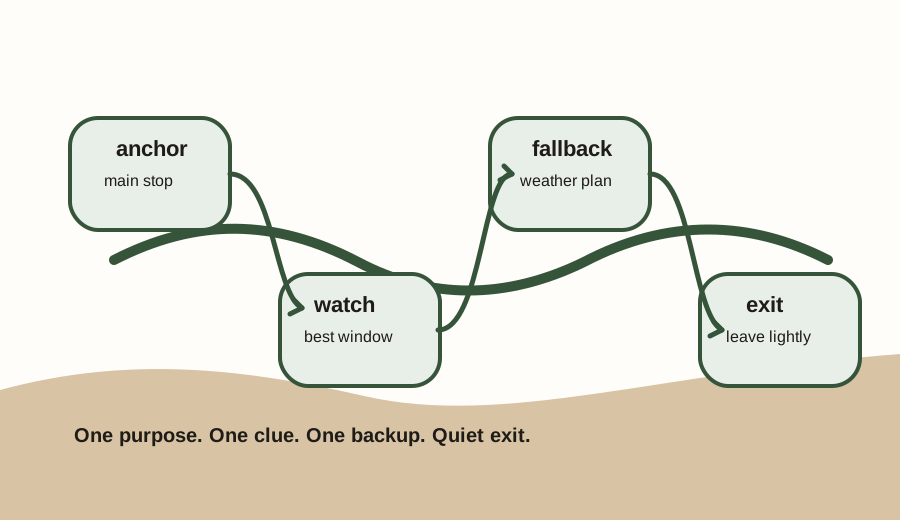
Term in use
A useful term should change what you notice. Match the definition to a place, a season, a species, and a low-impact way to observe it.
Use the term only after you can point to the clue on the ground.
Pair the term with one habitat and one species page.
Use related links to move from definition to field use.
Term paths
Open the floating glossary or these glossary hubs when a term needs context. The hubs collect the vocabulary that helps readers find the right department faster.