Name it
Use the term only after you can point to the clue on the ground.
Expert guide access FreePlan, recreate, explore, and prevent with Maryland field guides, outing planning, public-land resources, and wildlife conflict-prevention help.
Field glossary
Plant, habitat, ecology, natural-community, and flora/fauna relationship terms stay together here so wildlife pages can connect back to the living system.
Use this smaller glossary when you know the kind of word you need. Each entry still links to the best guide pages for field use.
Flora & Fauna Glossary
Showing 31 glossary terms.
No exact glossary match
The term may belong to one of the other focused glossaries, or it may need to be suggested for review.
Angling is fishing with rod and line, best planned by water body, current rules, habitat, access, and low-impact bank behavior.
Blowdown is a patch of trees or limbs knocked down by wind, ice, flood, or age, often creating cover, openings, and habitat complexity.
The upper layer of trees and leaves that shapes shade, temperature, nesting, feeding, and movement conditions below.
A canopy gap is an opening in the upper forest layer that lets more light reach the ground and can trigger seedlings, shrubs, insects, and edge-like activity inside woods.
A channel is the main path that carries moving water through a stream, river, marsh, or tidal creek.
The Chesapeake Bay region is defined by tidal rivers, marshes, broad shorelines, and weather patterns shaped by open estuarine water.
A closure notice is a current official restriction caused by weather, habitat protection, safety work, hunting management, fire risk, flooding, maintenance, or another temporary access issue.
A cove forest is a sheltered, moist forest pocket often found in mountain folds or protected slopes with richer soils, tall trees, and cooler air.
The Eastern Shore is Maryland’s broad low-relief landscape of marshes, fields, slow rivers, migration habitat, and water-shaped travel.
An ecotone is the transition zone where two habitats meet, such as meadow to woods, marsh to forest, or stream to floodplain.
An estuarine marsh is a tidal wetland influenced by both fresh water and saltier bay or ocean water.
Forest fragmentation is the breaking of larger forest blocks into smaller pieces by roads, development, fields, or utility corridors.
A headwater is the small upper reach of a stream system where springs, seeps, shaded runs, and narrow channels begin to shape water quality downstream.
High marsh is the higher marsh zone flooded less often than low marsh, often with different grasses, wrack lines, nesting cover, and foot-safety concerns.
A marsh platform is the broad vegetated surface of a marsh, shaped by elevation, flooding frequency, plant zones, wrack, and tidal drainage.
A north-facing slope generally holds shade, moisture, snow, moss, cool air, and spring plants longer than warmer exposures.
Overwash is the movement of storm-driven water and sand across a beach or barrier island, reshaping dunes, flats, access, and nesting habitat.
An oxbow is an old or cut-off river bend that can become slow water, wetland, or floodplain habitat depending on water connection and season.
The Piedmont is Maryland’s rolling upland transition between mountain country and tidewater, with reservoirs, stream valleys, woods, and edge habitat.
Prescribed fire is a planned, managed fire used by trained crews to maintain habitat, reduce fuel, or restore fire-adapted landscapes.
Public land is a park, refuge, forest, preserve, trail system, shoreline, or other managed place where access depends on current rules, closures, hours, permits, and responsible visitor behavior.
A ravine is a steep, narrow side valley where shade, slope, cool air, seeps, erosion, and protected travel routes can create distinct forest habitat.
Tidal exchange is the regular movement of water into and out of tidal creeks, marshes, flats, and bay edges.
A tidal marsh is a wetland flooded and drained by tide, supporting shoreline plants, wading birds, waterfowl, crabs, and edge habitat.
A tidal river is a river reach where tide, wind, salinity, marsh edge, and water level changes shape the field conditions.
The layer of shrubs, saplings, vines, and low vegetation beneath the forest canopy.
Wading means walking in water, a choice that can affect stream bottoms, refuge pools, spawning areas, footing, and aquatic habitat.
A watershed is the land area that drains to a shared stream, river, reservoir, wetland, bay, or coastal waterbody.
The land area that drains rain, snowmelt, and runoff into a shared stream, river, bay, pond, or wetland.
Wetlands are water-influenced habitats such as marshes, wet meadows, floodplain pockets, and beaver ponds that support rich seasonal life.
A wind tide is a water-level change caused by sustained wind piling water toward or away from a shoreline, sometimes overpowering the predicted tide.
Term in use
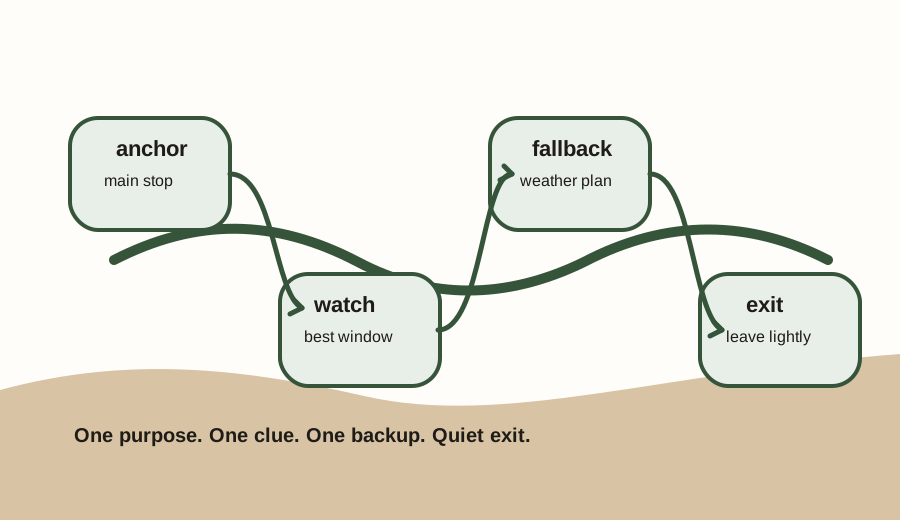
A useful term should change what you notice. Match the definition to a place, a season, a species, and a low-impact way to observe it.
Use the term only after you can point to the clue on the ground.
Pair the term with one habitat and one species page.
Use related links to move from definition to field use.
Term paths
Open the floating glossary or these glossary hubs when a term needs context. The hubs collect the vocabulary that helps readers find the right department faster.