Name it
Use the term only after you can point to the clue on the ground.
Expert guide access FreePlan, recreate, explore, and prevent with Maryland field guides, outing planning, public-land resources, and wildlife conflict-prevention help.
Field glossary
Planning, access, safety, ethics, methodology, customer-scope, and field-guide vocabulary stay together here as the general terminology reference.
Use this smaller glossary when you know the kind of word you need. Each entry still links to the best guide pages for field use.
Terminology Glossary
Showing 55 glossary terms.
No exact glossary match
The term may belong to one of the other focused glossaries, or it may need to be suggested for review.
Access conditions are the current rules, closures, hours, permits, hazards, and managing-agency notices that control whether and how a place can be used.
Access verification is the last official check before a trip: confirm hours, closures, permits, road gates, hunting seasons, water levels, and managing-agency notices instead of relying only on an older guide page.
Adventure sports are active outdoor trips such as paddling, climbing, biking, hiking, fishing, and skill-building days where conditions, safety, and pacing shape the plan.
An anvil cloud is the flattened top of a thunderstorm cloud and can signal lightning risk, changing wind, and a need to leave exposed water or ridgelines.
The Atlantic Coast is Maryland’s ocean-facing edge, shaped by barrier island beach, dunes, maritime weather, and migration corridors.
Backcountry is land that is farther from roads, services, and quick exit routes, requiring stronger navigation, weather, water, and emergency planning.
A bailout option is a pre-identified place to shorten, exit, or pause an outing when weather, injury, heat, cold, water, darkness, or group readiness changes.
Bank fishing is fishing from a shoreline, pier, bank, or access edge, where durable footing and bank protection matter as much as casting room.
Bay wind is wind shaped by open Chesapeake or tidal water; it can make shorelines colder, rougher, louder, and less protected than nearby inland woods.
A camp kitchen is the organized cooking setup for outdoor meals, usually including prep space, water, fuel, storage, and cleanup tools.
A camp stove is a portable cooking tool for reliable outdoor heat when fire conditions, weather, or campsite rules make open flame less practical.
A campsite footprint is the actual area affected by tents, kitchen, chairs, walking paths, gear, and repeated use.
Central Maryland combines river corridors, reservoirs, suburban park systems, and daily-use nature near the state’s population core.
A Civil War landscape is a place where terrain, roads, rivers, towns, farms, and battlefield history help explain how people moved through Maryland during the war.
Complacency drift is the slow loss of attention that can affect both beginners and seasoned outdoor users when familiar terrain, good weather, conversation, or confidence hides changing risk.
A day trip is a single-day Maryland outing planned around a clear goal, realistic drive time, one main landscape, and one or two nearby backup stops.
A durable surface is ground that can tolerate use with less damage, such as rock, gravel, boardwalk, established trail, or hardened campsite pad.
A family-friendly outing is planned around short distances, easy exits, flexible timing, bathrooms or nearby services when possible, and one main discovery goal.
A feedback loop is the path readers use to report a correction, suggest a missing term, or help improve a Maryland Wilderness guide page.
A fire ring is the designated outdoor cooking and fire area used to contain heat, sparks, and ash at a campsite.
A first-visit route is the simplest useful path through a place: an easy first stop, one main walk or overlook, a backup option, and a clear exit plan.
Fishing access is the legal and practical place to reach water without trespass, bank damage, unsafe footing, or rule conflicts.
Frost heave is the lifting and loosening of soil, trail tread, or rocks as water freezes and expands, often making winter and spring trails fragile.
A funnel is a landform, cover pattern, bridge, saddle, shoreline, or gap that narrows movement into a smaller route.
A gateway is a town, corridor, park cluster, or access area that helps a reader choose a realistic first route into a larger Maryland landscape.
A go/no-go check is the deliberate moment before or during an outing when the group decides whether conditions, people, daylight, signs, and official guidance still support continuing.
Gray water is used wash water from camp chores; it should be managed according to rules and kept from contaminating streams, wetlands, and shorelines.
A headwind blows against travel direction and can make hiking, paddling, and return routes harder than expected.
A heritage landscape is an outdoor place where natural features, settlement patterns, roads, water, work, and community history remain visible together.
Leaf-off describes the part of the year after deciduous leaves fall, when woods, ravines, nests, stream corridors, and distant slope structure become easier to see.
A loop route returns by a different path and can be efficient, but it may reduce easy bailout options when conditions change.
A meander is a river or stream bend where fast outside water, inside bars, undercut banks, and quiet edges create different field clues in one place.
Official conditions are the current alerts, closures, water levels, weather notes, fire restrictions, hunting dates, and access notices published or posted by the managing authority.
An out-and-back route follows the same path out and back, making turnaround time and changing conditions especially important.
A PFD is a personal flotation device used for paddling and boating; choose and use it according to current rules, conditions, and fit.
A planning block is one paid time segment for one main local-planning question and brief same-topic context, with extra unrelated questions treated as additional blocks.
A portage is carrying a boat around an obstacle or between waters, requiring durable footing and respect for private property and sensitive edges.
A posted sign is an on-site instruction, warning, closure, boundary, blaze, or rule that should be treated as current field information and checked against the planned route.
A put-in is the place where paddlers enter the water, best chosen by legality, footing, current, traffic, and shoreline durability.
Quick find is a scannable set of chips, dropdowns, and jump links that helps readers move from a broad guide page to the most relevant section or related page.
A Revolutionary-era site is a Maryland place connected to colonial, early American, port, trail, road, or community history that can be paired with a modern outdoor outing.
Route margin is the extra daylight, time, energy, water, warmth, access, and exit capacity built into a plan so small problems do not become urgent.
Southern Maryland combines tidal creeks, mixed woods, cliffs, river views, and quieter public landscapes south of the capital region.
A stop point is a prechosen place or condition where a group pauses to compare the actual outing with the plan before continuing, turning back, or changing course.
A switchback is a designed trail turn that reduces slope; cutting it causes erosion and widens impact.
A take-out is the planned exit from a paddle route and should be confirmed for access, water level, footing, and visibility before launch.
A talus slope is a steep accumulation of broken rock that creates crevices, dry pockets, thermal cover, and difficult footing.
A trail blaze is a painted, posted, or marked symbol used to identify a route; it should be checked with maps and current official information.
Trail grade is the steepness of a route; it often explains difficulty better than mileage alone.
A trail junction is a place where routes meet or split, making it a key moment for map checks, blaze checks, pace decisions, and group communication.
Trail tread is the walking surface of a trail, including soil, rock, gravel, boardwalk, mud, roots, or hardened path.
A trailhead is a starting access point where parking, rules, maps, restrooms, crowding, weather, and daylight shape whether an outing begins well.
A trailhead read is the first check of signs, maps, surface, weather, blaze, route difficulty, and group readiness before starting.
Turnaround time is the preplanned time or condition when a group heads back before daylight, weather, fatigue, tides, or route uncertainty become a problem.
Wayfinding is the practical work of knowing where you are, where the route goes, what landmarks matter, and how to adjust when conditions change.
Term in use
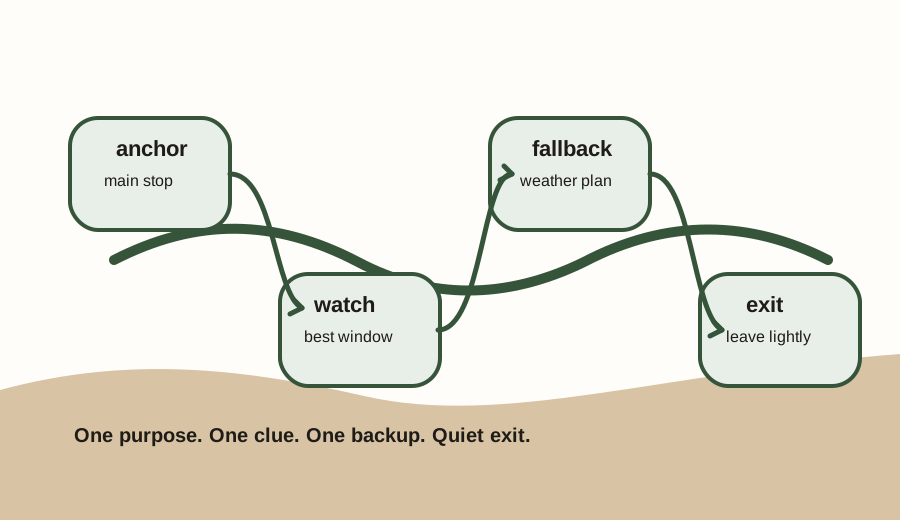
A useful term should change what you notice. Match the definition to a place, a season, a species, and a low-impact way to observe it.
Use the term only after you can point to the clue on the ground.
Pair the term with one habitat and one species page.
Use related links to move from definition to field use.
Term paths
Open the floating glossary or these glossary hubs when a term needs context. The hubs collect the vocabulary that helps readers find the right department faster.