Wildlife profile
Black Bear
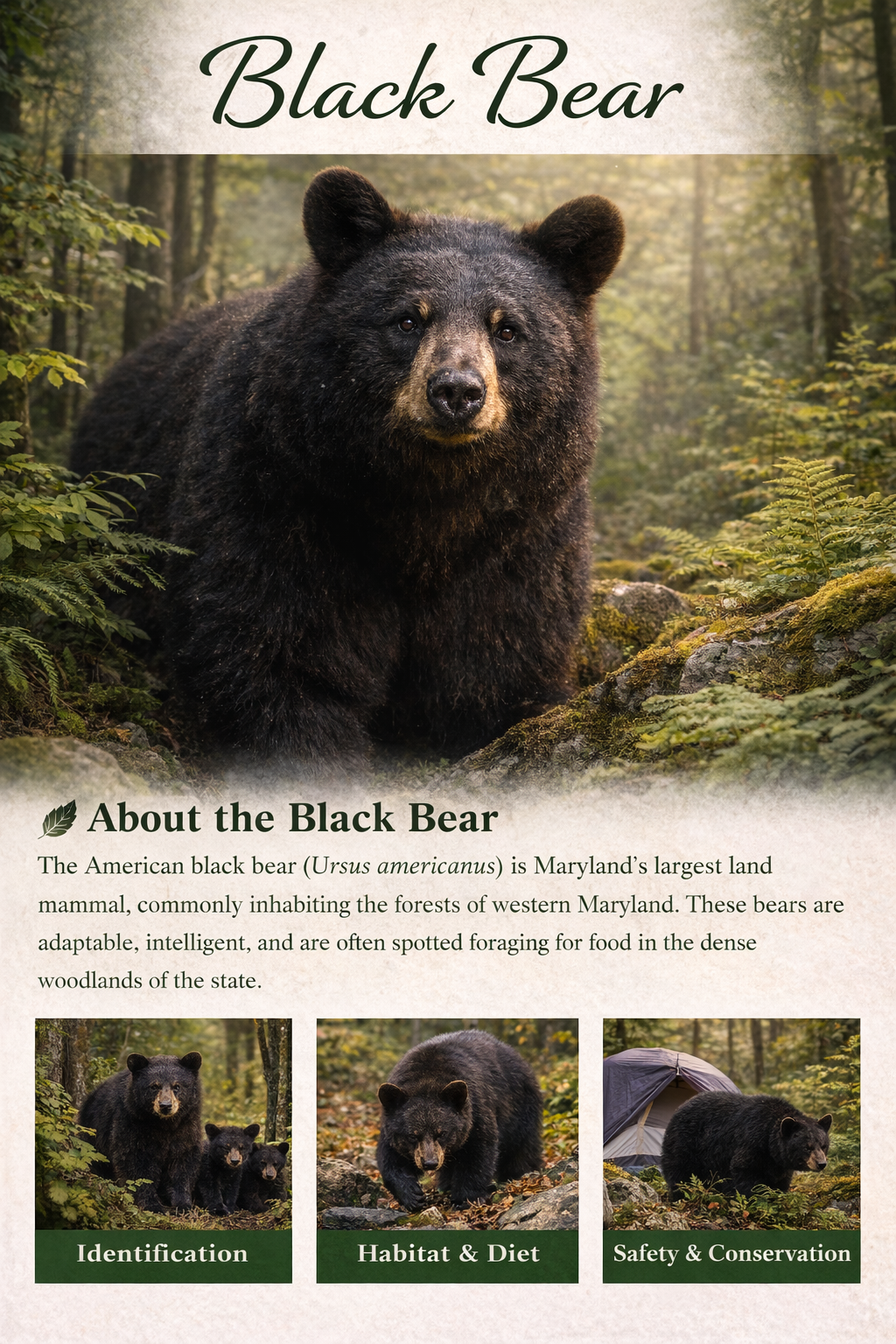
Black bears are part of Maryland’s wildlife story, even though the breeding population is concentrated in the western counties. The most useful way to understand them is through forest cover, seasonal foods, travel corridors, and the habits that reduce conflict between bears and people.
A bear page needs more than a one-line identification note. It should help readers notice berry crops, mast years, dense cover, riparian travel lanes, and the signs of an animal that uses large connected habitat rather than a single scenic overlook.
That wider context makes the page useful whether someone is reading before a mountain trip, after seeing sign along a trail, or simply trying to understand why large forest blocks still matter in Maryland.
Reviewed by
Reviewed by Michael Deem
Michael Deem is the editorial lead for Maryland Wilderness. His background includes a decade of wildlife damage control experience, private-applicator work beginning in 2007, and practical entomology knowledge that informs pages about attractants, insects, edges, structures, and seasonal wildlife use.
Pages are reviewed for Maryland specificity, field usefulness, outing realism, and practical wildlife prevention value.
Maryland Wilderness blends field interpretation, outing planning, and public-information prevention guidance. Confirm regulations, closures, permits, and case-specific wildlife-control decisions with the relevant authority, land manager, or licensed professional before acting.
What to notice
Look first at broad body shape, the dish of the face, the way the animal moves, and the context around it. Bears are often detected through sign before sighting: clawed bark, overturned logs, feeding sign in berries or mast, and trails through dense cover.
Seasonal behavior
Spring brings emerging bears and fresh green forage. Summer can concentrate activity around berries and cooler forest cover. Autumn often revolves around mast crops such as acorns and beechnuts, when bears feed heavily before winter denning.
Read the animal through its setting
Habitat and season matter most
Maryland context
Maryland DNR reports a breeding black bear population in the four westernmost counties of the state, making those counties the place where visitors are most likely to enter established bear country.
Respectful viewing
Never approach, corner, or feed a bear. Keep food secure, give the animal a clear exit, and remember that a distant bear behaving naturally is a better encounter than a close one forced into stress or movement.
Learn more