
Wildlife profile
Monarch Butterfly
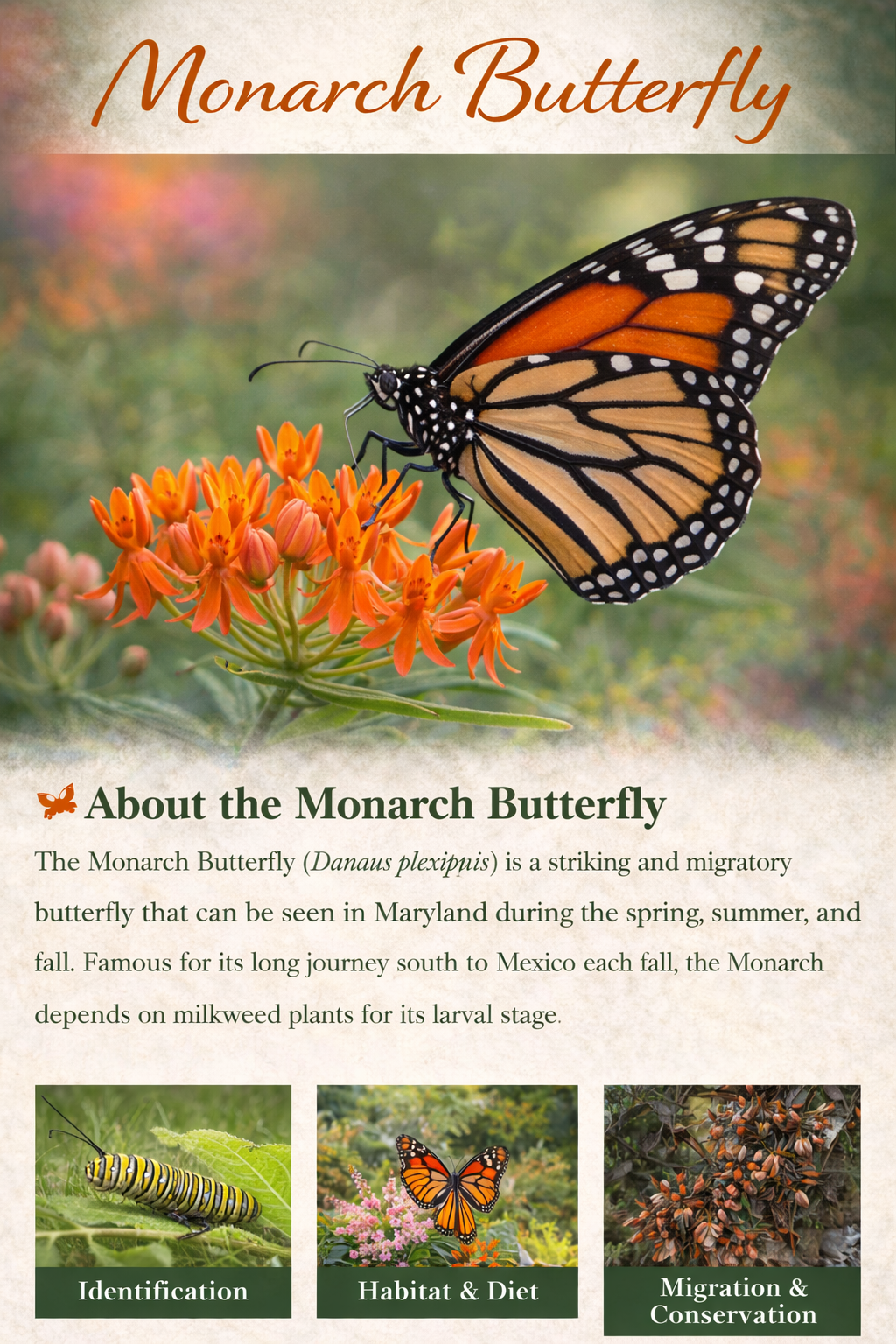
Monarchs bring migration, meadow habitat, and plant relationships into a scale almost anyone can observe. Across Maryland they turn roadsides, old fields, gardens, and sunny edges into wildlife habitat that can be read in real time.
A fuller species introduction matters here because monarchs are not only about the insect itself. They are about milkweed for reproduction, nectar-rich flowers for adult movement, and the quality of open habitat through summer and early autumn.
That makes the page useful with or without a large hero image: the main job is to help readers ask better field questions about plants, timing, and whether a place provides a continuous chain of support.
Reviewed by
Reviewed by Michael Deem
Michael Deem is the editorial lead for Maryland Wilderness. His background includes a decade of wildlife damage control experience, private-applicator work beginning in 2007, and practical entomology knowledge that informs pages about attractants, insects, edges, structures, and seasonal wildlife use.
Pages are reviewed for Maryland specificity, field usefulness, outing realism, and practical wildlife prevention value.
Maryland Wilderness blends field interpretation, outing planning, and public-information prevention guidance. Confirm regulations, closures, permits, and case-specific wildlife-control decisions with the relevant authority, land manager, or licensed professional before acting.
What to notice
Look for strong orange-and-black patterning, floating flight over flowering patches, and the presence of milkweed in or near open ground. Maryland DNR notes that milkweed is central to monarch reproduction because females lay eggs on it and caterpillars feed there.
Why this species belongs here
A monarch page turns a broad migration story into something visible in a roadside meadow, old field, garden margin, or utility corridor. It also makes edge habitat easier to value, especially in summer and early autumn.
Read the plants with the butterfly
Monarchs as a habitat story
Seasonal timing
Late summer and early fall are often the most rewarding times to watch adults moving through nectar-rich patches. Earlier in the season, the better question is whether milkweed and other host and nectar plants are present at all.
A useful field question
Instead of asking only whether monarchs are present, ask whether the place offers a chain of support: milkweed for larvae, nectar for adults, and open sunny structure that stays productive through the growing season.
Learn more