
Start
Pick the main reason for the stop before adding extra miles.
Guide value $97 FreeRead Maryland outdoors through field guides, outing planning, public lands, and wildlife conflict prevention.
Groundhog damage pattern
Groundhog, or woodchuck, calls often begin with a hole under a shed, deck, porch, foundation edge, garden line, or field margin. The page should help readers read whether the site is active, what reward keeps the animal there, and what should be documented before repair or exclusion.
Use this as public education, not removal instruction. Active burrows, property damage, trapping, relocation, and landowner permission questions should follow current Maryland agency and qualified-help pathways.
Field card
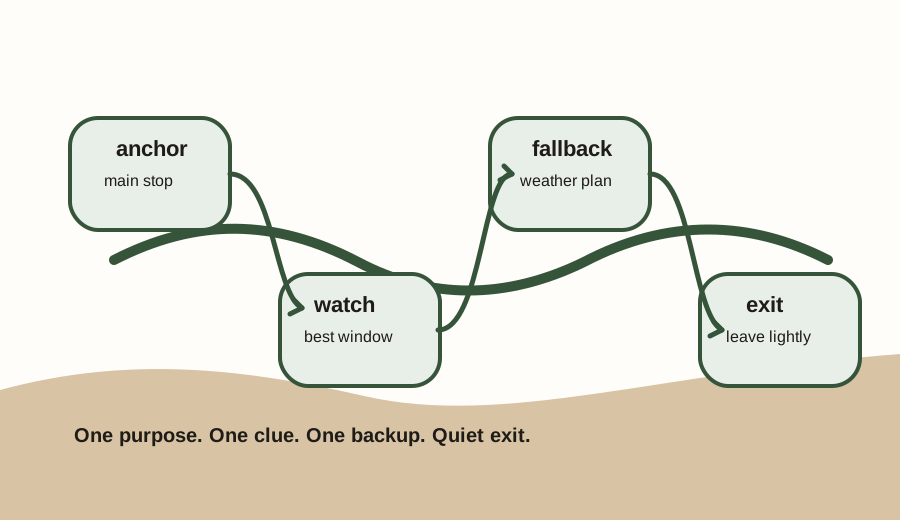
Use one anchor, one fallback, and one thing to notice closely. The best outing has a purpose before it has mileage.
Pick the main reason for the stop before adding extra miles.
Let weather, crowding, water, and daylight change the route.
Leave the place quiet enough that the next visitor can read it too.
Fresh soil, worn paths, clipped vegetation, tracks, or new plugging can help separate active use from an old hole.
Burrows near sheds, steps, decks, foundations, retaining walls, or equipment lanes deserve more caution than a distant field-edge hole.
Gardens, clover, alfalfa, orchard edges, field crops, and low cover can make the same site attractive again after a single repair.
Trapping, relocation, landowner permission, and professional work should follow current Maryland nuisance-wildlife guidance.
Document entrance points, soil movement, deck skirting, crawlspace connection, and whether young could be present before closing voids.
Look for repeated feeding, trails from cover, clipped plants, and burrow access that makes damage predictable rather than random.
Do not treat burrows near structures or working areas as a cosmetic issue. Stability, access, and safety may change the next step.
Department pathway
After burrows around structures and fields, continue to water-edge and bank-use patterns.
Written/reviewed by
This page is reviewed for safe public language around burrow reading, structure risk, field damage, prevention-first thinking, and Maryland agency boundaries.
This guide is public information, not a substitute for current Maryland agency direction, licensed professional work, legal advice, trapping advice, relocation direction, engineering evaluation, or property-specific service instructions.
Maryland Wilderness review is shaped by current Wildlife Damage Control Operator (WDCO) work through the Maryland DNR Wildlife & Heritage Service framework, ten years of wildlife-conflict experience since 2016, licensed private-applicator experience, practical entomology and pesticide knowledge, nuisance-pattern prevention, insects and attractants, habitat reading, and public education across Maryland wildlife topics.
Open full bioField-skill note
The field-guide pages are most useful when they turn a big outdoor question into a repeatable observation method.
Best use
Tracks, listening, habitat reading, packing, and planning each work better when you keep the exercise simple.
Elite move
A track, call, feather, plant, or trail choice is more useful when time, weather, substrate, season, and place are included.
Common mistake
Better field skill often means holding two or three possibilities until the setting narrows them.
Next step
That moves the guide from reading to field use.
Official source check: wildlife conflict
Wildlife-conflict pages are reviewed for public education, attractant reduction, documentation, and the correct official path. They do not authorize capture, handling, relocation, pesticide use, medical decisions, or work that requires a permit or licensed professional.
Source-check refresh: May 7, 2026. Verify current rules, closures, permits, seasons, health guidance, and access conditions with the official agency before acting.
Seasonal review
Season, weather, breeding windows, young wildlife, high water, heat, hunting seasons, closures, and protected-species timing can change what a reader should do next.
Seasonal review refresh: May 7, 2026. Always verify current rules, closures, permits, seasons, and protected-species instructions with Maryland DNR, the county health department, or the official land manager before acting.
Breeding windows, vernal pools, nesting birds, young wildlife, high water, mud season, and bat colony formation can make ordinary field behavior too intrusive.
Heat, storms, ticks, snakes, beach protections, nesting colonies, flightless young, and bat maternity timing should push readers toward shade, distance, and official timing checks.
Migration, mast, rut movement, hunting seasons, bear food pressure, leaf-off visibility, and falling temperatures change both wildlife behavior and public-land use.
Ice, hypothermia, road closures, waterfowl concentration, denning, hibernation, and low daylight require conservative trip planning and no-disturbance wildlife observation.
Burrow and structure guide trail
Use this path when a caller is asking about decks, sheds, crawlspaces, foundations, gardens, field edges, burrows, or repeated damage.
Term paths
Blue dotted glossary terms open quick definitions. These hubs collect the vocabulary that helps readers find the right department faster.
Interoperable guide system
Use the previous/next links for this department, then jump sideways into the related Maryland Wilderness departments that help explain the same outing, animal, place, or season.