Wildlife profile
Barred Owl
Barred owls are often known first by voice. Across Maryland they are most closely tied to mature forest, wet woods, ravines, and streamside cover where sound carries well at dusk and on quiet winter evenings.
That makes them useful well beyond a single sighting. A barred owl page can help readers understand what good owl country looks and sounds like: older trees, layered canopy, nearby water, and enough uninterrupted cover for hunting and roosting.
In the western counties those conditions can be especially dramatic, but the same field cues matter anywhere in Maryland where broad woods meet wet ground and evening stillness makes the forest easier to read.
Reviewed by
Reviewed by Michael Deem
Michael Deem is the editorial lead for Maryland Wilderness. His background includes a decade of wildlife damage control experience, private-applicator work beginning in 2007, and practical entomology knowledge that informs pages about attractants, insects, edges, structures, and seasonal wildlife use.
Pages are reviewed for Maryland specificity, field usefulness, outing realism, and practical wildlife prevention value.
Maryland Wilderness blends field interpretation, outing planning, and public-information prevention guidance. Confirm regulations, closures, permits, and case-specific wildlife-control decisions with the relevant authority, land manager, or licensed professional before acting.
What to notice
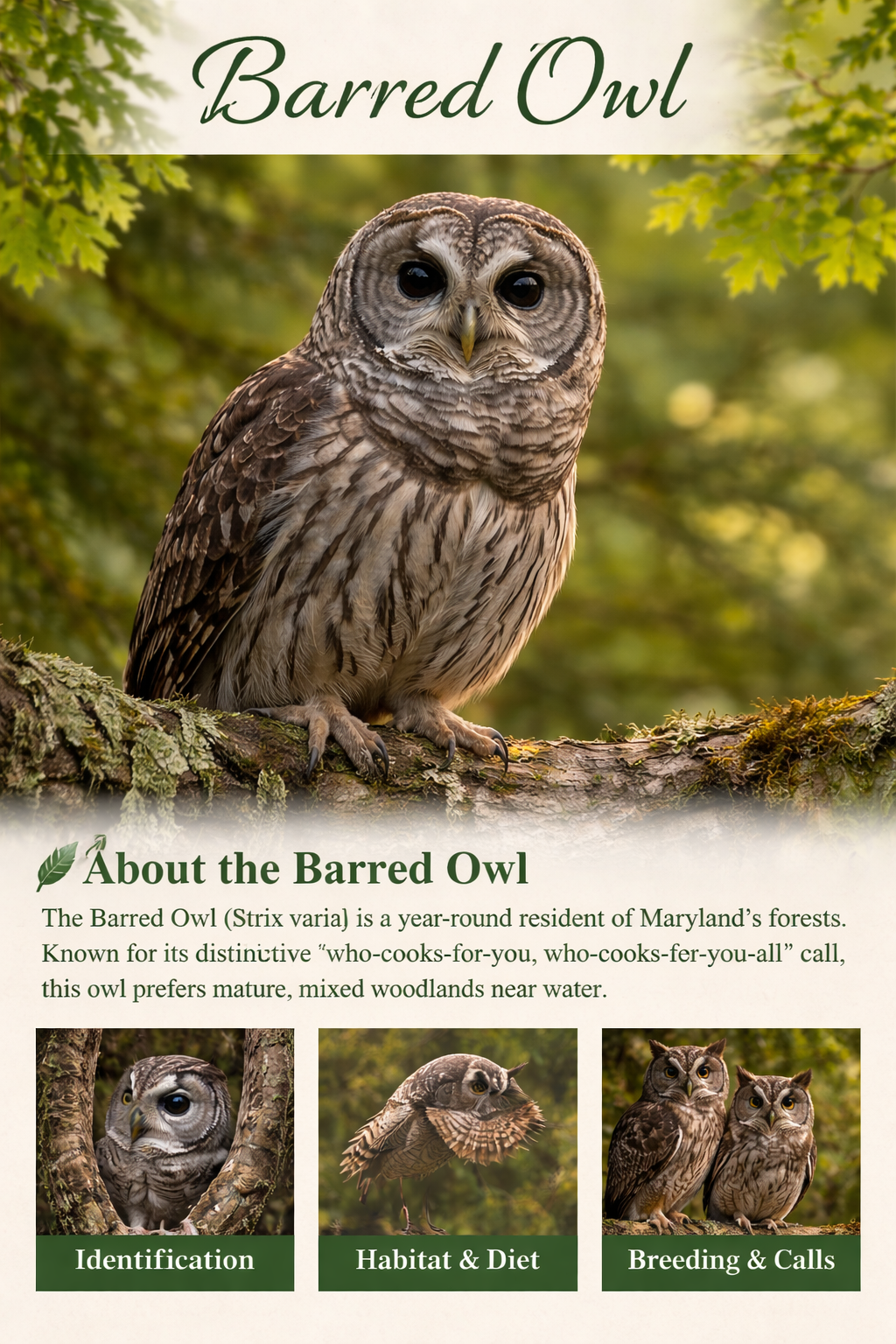
The rounded head, dark eyes, and heavily barred plumage help distinguish this owl when it is seen well. More often, though, the first clue is voice. Maryland DNR notes its well-known call often rendered as “who cooks for you, who cooks for you all.”
Where it fits
Barred owls do best where there is mature forest structure, cavities or broken tops for nesting, and enough wet or wooded habitat to support small mammals, amphibians, crayfish, and other prey.
Read the woods through sound
A good species for dusk and winter
Best conditions for listening
Choose still evenings, the quieter edges of larger woods, or winter days when leaves are down and sound travels farther. Slow walking and long pauses work better than constant movement.
Why habitat matters
A barred owl page is not only about the bird. It is also a guide to mature forest condition: big trees, cavity opportunities, nearby water, and enough continuity of cover to support a stable territory.
Learn more