
Wildlife profile
Brook Trout
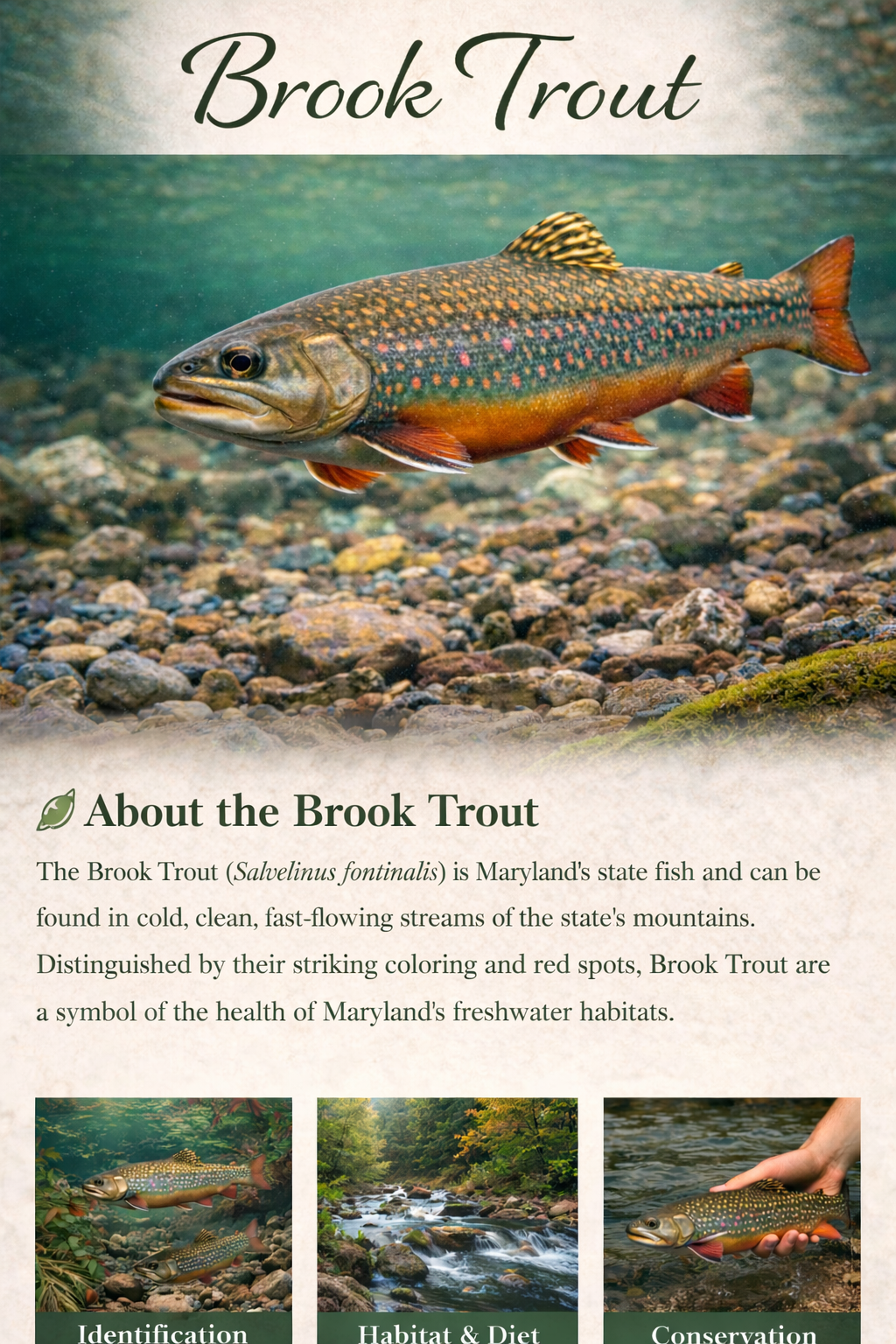
Brook trout are one of the clearest ways to understand cold water in Maryland. When a stream stays shaded, well oxygenated, connected to clean tributaries, and structurally intact, brook trout are often part of the story.
Their strongest populations are in the western counties, but the lesson is broader than one region. Brook trout pages help readers notice riparian shade, groundwater influence, woody cover, gravel quality, and the stream corridor conditions that support an entire cold-water community.
That gives the page enough substance to stand beside a hero image or to work on its own as a text-led profile, because the real subject is the stream system as much as the fish itself.
Reviewed by
Reviewed by Michael Deem
Michael Deem is the editorial lead for Maryland Wilderness. His background includes a decade of wildlife damage control experience, private-applicator work beginning in 2007, and practical entomology knowledge that informs pages about attractants, insects, edges, structures, and seasonal wildlife use.
Pages are reviewed for Maryland specificity, field usefulness, outing realism, and practical wildlife prevention value.
Maryland Wilderness blends field interpretation, outing planning, and public-information prevention guidance. Confirm regulations, closures, permits, and case-specific wildlife-control decisions with the relevant authority, land manager, or licensed professional before acting.
What makes brook trout important
Maryland DNR describes brook trout as Maryland’s only native salmonid. Their presence is strongly tied to water temperature, clean gravel, overhead cover, and the broader health of the watershed.
What to notice on the ground
Look for shade from forested banks, cooler tributaries entering a stream, undercut banks, woody cover, riffles and pools, and gravel not buried in heavy sediment. These are signs of a stream that can support cold-water life.
Read the stream, not just the fish
Brook trout as a habitat signal
Where cold headwaters matter most
Garrett and Allegany counties contain some of Maryland’s strongest brook trout waters. In practical terms, that means trout pages belong beside forest protection, streambank condition, and road-crossing or runoff questions, not just fishing interest.
A careful way to read streams
Even if you are not fishing, brook trout pages help you understand the entire corridor: salamanders, insects, riparian trees, and the way cool water shapes wildlife movement through the valley.
Learn more