
Quick answer
Choose the trail that matches the season, not the trail that looked best in a photo.
Maryland trails change dramatically across the year. Spring brings mud, flowers, amphibian movement, high water, and fresh leaf-out. Summer adds heat, insects, dense vegetation, and a premium on shade. Autumn improves comfort and visibility but can concentrate crowds on famous overlooks. Winter opens views, reveals animal sign, and shortens the safe daylight window. A smart hiking plan begins by asking which season you are actually hiking in.
Mileage matters, but it is rarely the whole answer. Grade, footing, water crossings, exposure, trail markings, crowd levels, and the return route shape the difficulty more honestly than a number on a map. A three-mile loop with steady footing can be a family win; a shorter ravine descent after rain can be the wrong choice. Choose by the weakest constraint and the day improves immediately.
- Check season before distance.
- Match slope and surface to the group.
- Build a turnaround time before starting.
- Use public-land notices for current conditions.
Trailhead read
Read the trailhead before the hike begins.
A trailhead tells you a lot if you slow down. Look at the parking surface, signs, map board, blaze color, temporary notices, mud on returning hikers, dog use, trash, bathroom availability, and how quickly the trail narrows or drops. The first glance should answer whether this is a quiet field walk, a busy overlook route, a stream valley, a rocky ridge, or a mixed-use corridor where pace and awareness need to be higher.
The trailhead is also where group communication should happen. Confirm the route, turnaround time, bathroom plan, water, weather, and what the group will do if someone gets tired or conditions change. Professional hiking is often less dramatic than people imagine. It is the calm work of making good decisions early enough that they still matter.
- Find the map, blaze, and return route before moving.
- Read posted rules and closure notices.
- Check whether pets, bikes, horses, or hunters may share the area.
- Set a turnaround time before enthusiasm takes over.
Terrain
Ravines, ridges, stream crossings, and overlooks ask for different behavior.
A ravine hike is a moisture, slope, and footing problem. A ridge hike is often an exposure, rock, wind, and distance problem. A stream-valley hike can be shade-rich and wildlife-rich but more sensitive after rain. An overlook hike may be simple in concept but crowded at the destination. Each terrain type changes the way the group should move, pause, and observe.
The more you understand terrain, the less you need to force a famous route. In leaf-off season, a short ravine walk can teach more about old woods, seeps, downed wood, and stream bottoms than a longer trail chosen only for a viewpoint. In summer, a shaded bottomland loop may be more humane than an exposed ridge. Trail choice should serve the day, not the other way around.
- Ravines require footing and moisture awareness.
- Ridges require wind, rock, and exposure awareness.
- Stream crossings require recent-rain judgment.
- Overlooks require crowd and edge awareness.
Weather
After rain, choose trails by drainage and durability.
Wet trails are not all equal. A gravel rail trail, boardwalk, or well-drained ridge may remain durable while a low stream-bottom trail becomes muddy and easily damaged. The best post-rain hiking plan protects both the visitor and the trail. If every step is widening the path, cutting switchbacks, or sliding off the tread, the right move is to turn around or choose a harder surface.
Mud is also an ecological signal. Low areas may be holding amphibians, insects, and sensitive wet-soil communities. A trail that feels merely inconvenient to a hiker can be the edge of a living wetland or seep system. Staying on trail still matters, but the better choice is often selecting a more durable route before the damage starts.
- Avoid widening muddy trails.
- Do not cut switchbacks to dodge wet spots.
- Use boardwalks, gravel, or durable surfaces after heavy rain.
- Treat seeps and wet margins as habitat, not obstacles.
Wildlife
A hiking trail can become a wildlife observation route if you stop rushing.
Wildlife watching while hiking is less about covering ground and more about using pace. Pause at edges, stream bends, overlooks, large trees, coves, meadow margins, and places where sound changes. Listen before stepping into a new habitat. Watch for movement across the trail rather than only down the trail. Many animals are noticed only when a hiker breaks the habit of constant motion.
Quiet hiking also reduces disturbance. Keep distance, use binoculars, and avoid following animals off route. If an animal stops feeding, stares, flushes, vocalizes, or changes its path because of you, the distance is too close. The best wildlife hikes leave the animals doing what they were already doing.
- Pause at edges and water before entering them.
- Use binoculars instead of approach.
- Keep voices low near wildlife activity.
- Do not leave the trail to chase a sighting.
Gear
Carry enough to solve the day, not enough to perform competence.
A Maryland day-hike kit should answer weather, hydration, navigation, light, footing, insects, and small emergencies. That can mean water, snack, map or downloaded route, headlamp, rain layer, blister care, sun and tick planning, and a simple insulation layer when the season calls for it. The point is not to buy an impressive kit. The point is to prevent common small problems from becoming the day’s main story.
Good gear decisions are activity-specific. A short boardwalk wildlife loop does not need the same footwear as a rocky mountain route. A summer meadow walk does not need the same clothing as a windy winter ridge. Teach readers to match gear to surface, temperature, duration, and exposure, and affiliate recommendations can remain useful rather than generic.
- Bring water, light, navigation, weather layer, and first-aid basics.
- Match footwear to surface, not fashion.
- Plan for ticks, sun, and insects by season.
- Skip gear that adds weight without solving a real risk.
Ethics
Leave No Trace for hikers begins with the footstep.
Hikers shape trails by where they put their feet. Staying on the existing tread, avoiding shortcutting switchbacks, stepping through rather than around small muddy patches when necessary, and choosing durable alternatives after heavy rain all reduce erosion. Group size, dog control, noise, and bathroom habits matter too. The trail is not just a path through habitat; it is a pressure line that can either stay narrow or spread damage outward.
A professional hiker also respects other uses. In Maryland, public lands may include anglers, hunters, birders, families, cyclists, equestrians, dog walkers, and maintenance crews. Read posted rules, be visible when appropriate, yield calmly, and let the shared landscape work for more than one kind of visitor.
- Stay on trail and avoid shortcuts.
- Respect closures and seasonal management.
- Keep dogs where allowed and controlled.
- Leave natural objects, plants, and wildlife where they are.
Regional pattern
Maryland hikes are not one terrain category.
Western Maryland can mean rocky grades, colder hollows, longer drives, exposed ridges, and mountain weather. Central Maryland often means stream valleys, reservoirs, suburban access, and heavier trail traffic. Southern Maryland can mean creek edges, mixed woods, fields, and flatter but sometimes humid routes. The Eastern Shore and Bay region often shift toward marsh boardwalks, open wind, sand, insects, and wide sky.
Choose hikes with that regional logic in mind. A visitor who loves mountain overlooks may still need a boardwalk marsh day in winter. A family that dislikes steep terrain may thrive on a short shoreline loop. A wildlife watcher may see more by walking less in the right habitat. Region shapes the trail before the trail name does.
- Western hikes often add grade, rock, and weather exposure.
- Central hikes often add crowds, reservoirs, and stream valleys.
- Bay and Eastern Shore hikes often add wind, marsh, insects, and open sightlines.
- Southern routes often reward creek, field, and mixed-woods awareness.
Beginner mistake
Do not confuse short with easy or long with worthwhile.
A short trail with slick rock, eroded slope, poor blazes, or wet crossings can be harder than a longer maintained route. A long route without field interest can be less rewarding than a modest loop with water, edges, old trees, and wildlife sign. Professional hiking judgment separates distance from quality.
For thin-content prevention, this is also the better editorial angle. Instead of publishing generic lists of short hikes, explain why a trail works: surface, shade, grade, bailout points, habitat variety, seasonal value, and whether the route teaches anything about Maryland landscapes.
- Rate trails by surface, grade, and exposure as well as miles.
- Value habitat variety and repeatability.
- Use bailout options as a quality signal.
- Avoid chasing distance for its own sake.
Group pace
The right pace is the one that keeps the group observant.
A group moving too fast stops noticing the place and starts managing discomfort. The slower person, the youngest child, the least confident hiker, or the person with the least appropriate footwear should influence the route. That is not lowering the standard; it is building a hike the whole group can complete well.
Use natural pauses: trailhead, first climb, first stream, first junction, halfway point, and final return decision. These pauses turn pace into a planning tool and create chances to read habitat, check water, adjust layers, and notice wildlife sign.
- Use the slowest sustainable pace as the plan.
- Pause at junctions and habitat changes.
- Check comfort before committing to the farthest point.
- Make observation part of rest.
Seasonal value
Each season teaches a different hiking skill.
Spring teaches mud judgment, wildflower caution, amphibian awareness, and high-water respect. Summer teaches shade selection, heat pacing, tick and insect planning, and earlier starts. Autumn teaches crowd management, mast awareness, migration windows, and leaf-covered footing. Winter teaches leaf-off structure, track reading, wind exposure, and daylight discipline.
A professional hiking library should use those seasonal differences rather than writing one generic page for all months. The best evergreen article can remain stable because the seasonal framework repeats every year, even as specific conditions change.
- Spring: mud, water, flowers, amphibians.
- Summer: heat, shade, insects, hydration.
- Autumn: leaves, crowds, mast, migration.
- Winter: daylight, tracks, wind, structure.
Trail learning
Turn every hike into one small lesson.
A hike becomes more memorable when it has one learning goal. Identify one tree layer, read one stream crossing, compare two trail surfaces, practice using a map, listen for one bird group, or notice how light changes at an edge. This keeps the outing from becoming only exercise and gives families or beginners a reason to return.
The site can use this method across internal links. A trail article can point to ravines, older woods, stream bottoms, overlooks, wildlife distance, and monthly pages. That creates a richer guide experience without stuffing the trail page with random facts.
- Choose one field lesson per hike.
- Connect trail observations to glossary terms.
- Use short repeat visits to build confidence.
- Let learning goals replace checklist pressure.
Gear judgment
Useful hiking gear starts with the route problem.
A professional hiking article can support gear decisions without becoming a shopping page. Start with the problem: muddy tread, rocky footing, heat, insects, wind, short daylight, children, or navigation. Then explain the tool that solves it. Footwear should match the surface. A headlamp solves late return risk. A rain layer solves exposure. A map or offline route solves uncertainty at junctions. Water and snacks solve pacing and morale.
This approach keeps recommendations evergreen because the logic lasts longer than a product model. Readers learn how to choose, not what to buy blindly. That improves trust, supports affiliate opportunities responsibly, and keeps the page focused on field usefulness rather than commercial filler.
The same standard applies to what to skip. Skip heavy extras that slow the group, fragile items that do not fit wet trails, and trendy gear that does not answer the route. The best kit is the one that helps the hiker finish comfortably while leaving the trail narrow and intact.
- Match footwear to tread, mud, rock, and distance.
- Carry light, water, navigation, weather protection, and small first-aid basics.
- Use trekking aids only where they do not damage fragile tread or vegetation.
- Recommend gear by use case, not by hype.
Route judgment
Professional hiking starts with the trailhead, not the summit.
A trailhead is a field report. Full parking, muddy boots, warning signs, washed gravel, fresh blowdowns, hunting-season notices, and bathroom conditions all tell you how the day is likely to feel. Before committing, read the first hundred yards: drainage, slope, surface, crowding, shade, and whether the route immediately asks more of the group than the plan assumed.
This approach turns hiking from mileage collection into field decision-making. A short loop with good habitat cues may be more useful than a longer route that rushes past everything. A boardwalk, overlook, stream crossing, ridge shoulder, or ravine descent can teach terrain, water, wildlife sign, and seasonal change if the reader knows what to notice.
Field note: Muddy trail edges often show both wildlife sign and human impact; stay on durable tread rather than widening the damage.
- Read signs and surface before starting.
- Compare the route to daylight and group energy.
- Choose habitat learning over mileage pressure.
- Turn around early enough to finish well.
Seasonal trail use
The same trail is a different guide in every season.
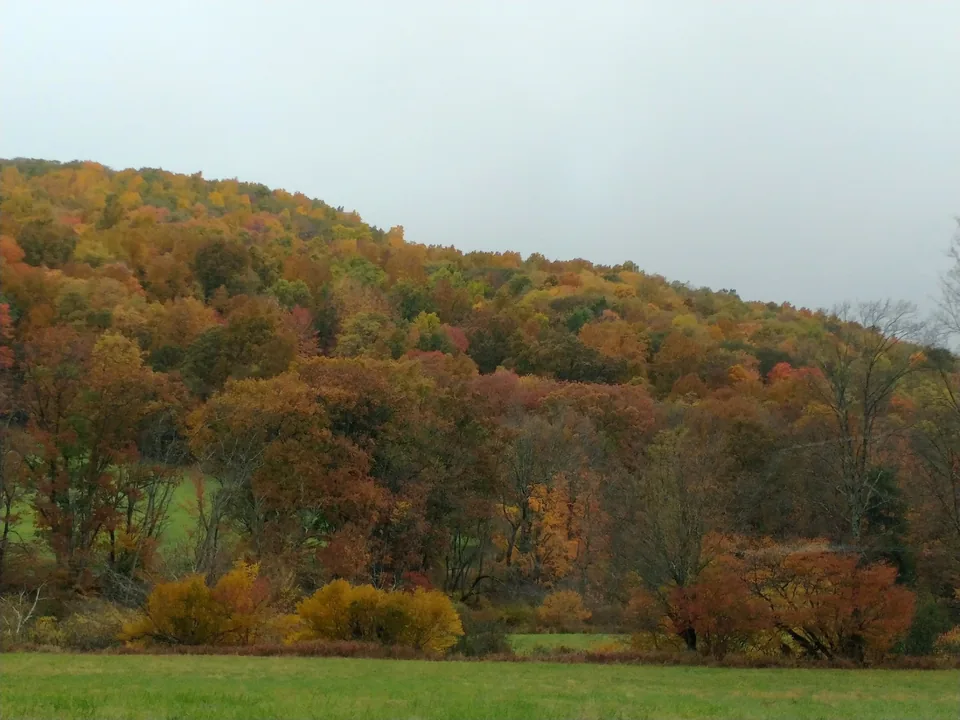
Spring highlights wet spots, amphibian movement, swollen crossings, early wildflowers, ticks, and soft soil. Summer shifts attention to heat, shade, water needs, insects, afternoon storms, and how much slower a family group may move. Fall reveals mast, leaf color, hunting-season considerations, and crowded overlooks. Winter and leaf-off expose ravine shape, old stonework, nests, tracks, and the way low sun changes footing.
A professional hiking article should make those changes useful. Instead of saying a trail is good year-round, explain how the reader should behave differently in each season. The page becomes evergreen because it teaches adjustment rather than promising a fixed experience.
- Spring: protect wet trail edges.
- Summer: plan heat and water conservatively.
- Fall: expect crowds and hunting-season context.
- Winter: use leaf-off structure and shorter daylight.
Gear and pace
Carry what supports attention, safety, and restraint.
Hiking gear should serve the route, not become the route. Footwear, water, weather layers, sun protection, tick awareness, a small first-aid kit, a charged phone, a paper or offline map option, and a simple snack plan matter because they keep the group calm enough to make good decisions. The best equipment helps a hiker slow down, notice habitat, and avoid risky shortcuts.
Affiliate-compatible hiking guidance should explain why each item belongs. Rain gear matters because Maryland storms can turn a pleasant outing into a cold walk back. Footwear matters because wet roots, stream crossings, and clay soils change footing. A headlamp matters because short winter light punishes late starts. The useful guide connects gear to field consequences.
Field note: The least dramatic gear is often the most important: water, layer, map, light, and enough time.
- Recommend gear by field problem.
- Favor calm decision-making over maximal packing.
- Plan for rain, ticks, heat, and short light.
- Keep route complexity matched to the group.
Low-impact movement
A good hiker protects the trail while using it.
Trail damage usually grows from small choices: stepping around mud, cutting switchbacks, spreading out through vegetation, letting dogs pressure wildlife, leaving micro-trash, or pushing through a closure because the destination feels close. A professional guide normalizes restraint before those moments happen. It gives the reader permission to turn back, choose a drier route, or accept a shorter day.
Leave No Trace for hiking is not a slogan. It is a sequence: plan ahead, stay on durable surfaces, manage waste, leave what you find, minimize fire impacts where relevant, respect wildlife, and be considerate of others. On Maryland trails, that often means treating wet ground and crowded overlooks as the real test of skill.
- Do not widen muddy trails.
- Respect closures and posted seasonal limits.
- Control dogs where allowed and avoid wildlife pressure.
- Pack out micro-trash, including snack corners and tissues.
Trail surface
Trail condition matters more than the trail name.
A trail name cannot tell you whether the day is ready. The same loop can be pleasant in leaf-off, slick after rain, buggy in midsummer, crowded on a warm weekend, or quietly excellent on a cloudy winter morning. Before starting, inspect the first stretch of surface. Look for standing water, boot-sucked mud, fresh erosion, exposed roots, compacted shortcuts, washed gravel, ice pockets, or soft shoulder where people have stepped around trouble.
This is where professional hiking content becomes practical. Instead of ranking trails by popularity, it teaches hikers to ask whether their feet will improve or damage the route today. If the surface is saturated, pick a boardwalk, gravel path, overlook, paved greenway, or shorter route on better-drained ground. A changed plan is not failure; it is trail stewardship.
- Let the first hundred yards report the day.
- Choose durable routes after heavy rain or freeze-thaw cycles.
- Avoid walking around mud if that widens the trail.
- Use short, firm, educational routes when conditions are poor.
Reading terrain
Use slope, water, and exposure to choose pace.
Mileage hides effort. A half mile that drops into a ravine, crosses a wet bottom, climbs a rocky ridge, and returns in fading light can ask more of a group than two flat miles on a firm path. Read terrain before reading distance. Notice slope angle, stream crossings, drainage, exposed rock, shade, wind, and whether the return is uphill or down.
Terrain reading also improves wildlife observation. Ravines hold cooler air and moisture. Ridges can reveal wind, oak mast, and leaf-off views. Stream crossings concentrate tracks and amphibian movement but can be sensitive after storms. Overlooks are not just scenic stops; they are places to compare forest layers, water, roads, fields, and edges. The hike becomes a field lesson instead of a walk to a finish line.
Field note: The most interesting part of a hike is often the transition: ridge to ravine, dry woods to wet bottom, open edge to older forest.
- Compare elevation change with daylight and group energy.
- Treat stream crossings as decision points.
- Use overlooks to read the wider landscape.
- Slow down in ravines, wet bottoms, and rocky sections.
Quiet hiking
Quiet movement turns a trail into a wildlife route.
Many hikers see less wildlife because they move as if the trail is only exercise space. A quieter pace changes that. Pause before bends. Stop at habitat transitions. Let the group settle after loud sections. Watch edges before walking into them. Use binoculars from the trail instead of stepping off for a better angle. The goal is not to sneak up on animals; it is to stop announcing yourself at every step.
This method works on short routes too. A half-hour walk can reveal woodpeckers, deer trails, squirrel feeding signs, fox scat, stream insects, owl pellets, or leaf-litter movement if the group stops long enough. The article becomes more useful when it teaches a rhythm: walk, pause, listen, scan, name the habitat, and move on without widening the route.
- Pause before entering open edges or overlooks.
- Use trail stops instead of off-trail approaches.
- Listen for alarm calls, wingbeats, water, and leaf movement.
- Let children search for signs rather than chase sightings.
Hiking with weather
Weather changes the hike before it changes the forecast.
A professional hiking plan reads weather as field condition, not just comfort. Rain changes footing and stream crossings. Heat changes water needs, shade value, pace, and wildlife activity. Wind changes ridges, dead limbs, exposed overlooks, and paddling or shoreline plans before or after the hike. Cold changes daylight margin, ice in shaded spots, and how quickly a resting group cools down.
Instead of treating gear as a shopping list, connect it to decisions: rain shell for staying patient, traction or route change for icy shade, layers for dawn and dusk, headlamp for winter turnaround margin, map backup for low signal, and enough water to avoid forcing speed. Gear should support judgment; it should not make a poor route choice feel justified.
Field note: A sunny day after rain can still be a muddy trail day.
- Check weather, but also read what weather did to the trail.
- Build a turnaround time before starting.
- Carry layers that match stopping, not only walking.
- Choose shorter or firmer routes when weather narrows the margin.
After-action notes
Every hike should improve the next route choice.
The simplest way to build local expertise is to write down what the trail actually taught. Note start time, finish time, surface condition, mud, crowding, wildlife signs, water crossings, shade, wind, confusing junctions, and whether the group had enough time and energy. These notes turn a one-time hike into a personal field reference.
This habit also keeps content from becoming thin. Maryland Wilderness can recommend habits readers repeat: compare the same route in leaf-off and full canopy, revisit a stream after rain and after dry weather, or return to an overlook at dawn instead of midday. The reader learns that professional hiking is not about collecting more trails; it is about reading familiar places better.
- Record trail condition, not just mileage.
- Note the best habitat transition of the day.
- Track where the group slowed down or rushed.
- Use the note to choose the next route more wisely.
Decision table
Choose the next move by condition, not habit.
Field checklist
Use this before leaving the trailhead, bank, launch, or campsite.
- Read the trailhead signs and blaze system.
- Check weather, daylight, and recent rain.
- Set a turnaround time.
- Carry water, light, navigation, and weather protection.
- Choose durable trails after wet weather.
- Use pauses to watch wildlife without chasing it.
Professional field depth
Use these checks before the next field decision.
Use the page to choose a route, bank, campsite, launch, or observation method from what the field is showing today.
Each recommendation favors durable surfaces, wildlife distance, clean exits, and respect for official rules.
Move between activity, habitat, wildlife, glossary, public-land, and season pages so one outing teaches the whole landscape.